
More than 90 of the thickeners used worldwide are soap based. The different types of soap thickeners include lithium 12-hydroxy stearate soaps lithium stearate soaps calcium soaps sodium soaps and aluminum soaps.
A Guide To Grease Thickeners Twin Specialties Corp

Interflon What Is The Difference Between Oil And Grease
Choosing The Right Grease Synthetic Engine Oil Lubrication Products Sinto Lubrication Experts
Greases are classified into two major families.
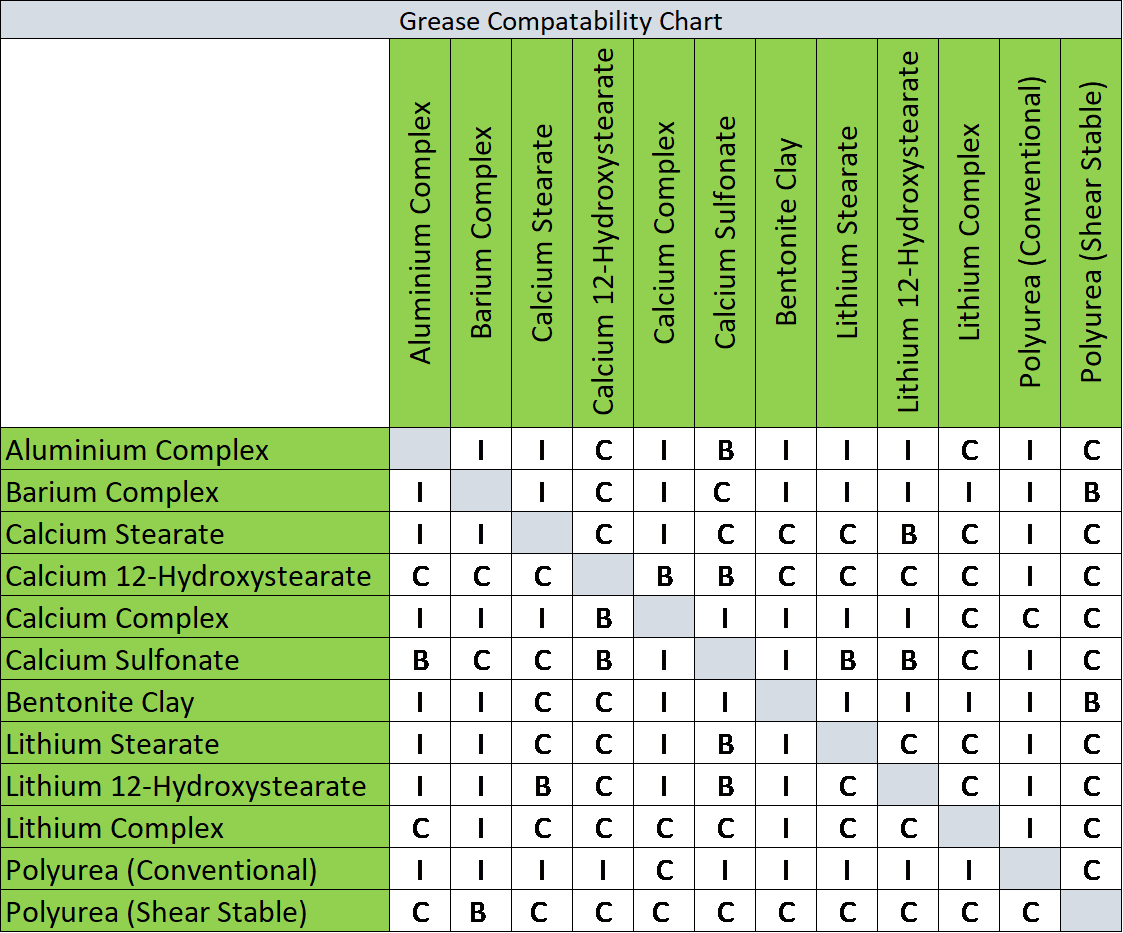
Grease thickener types. This classification includes diurea tetraurea urea-urethane and others. Typical urea grease formulation uses organic compound containing more than two urea groups -NH-CO-NH- as thickening agent. Shear stable polyurea grease is more accommodating than conventional polyurea and can be compatible with a large selection of grease types.
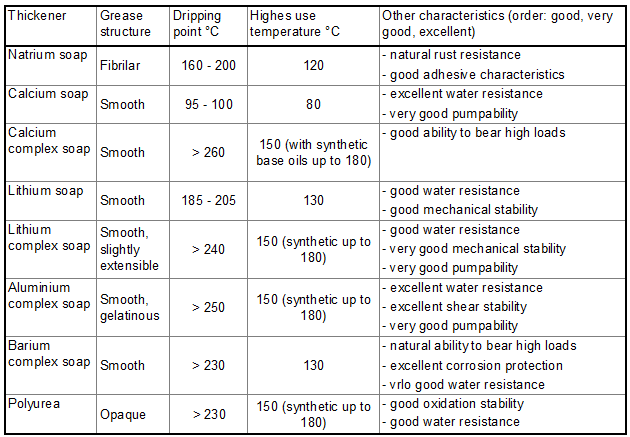
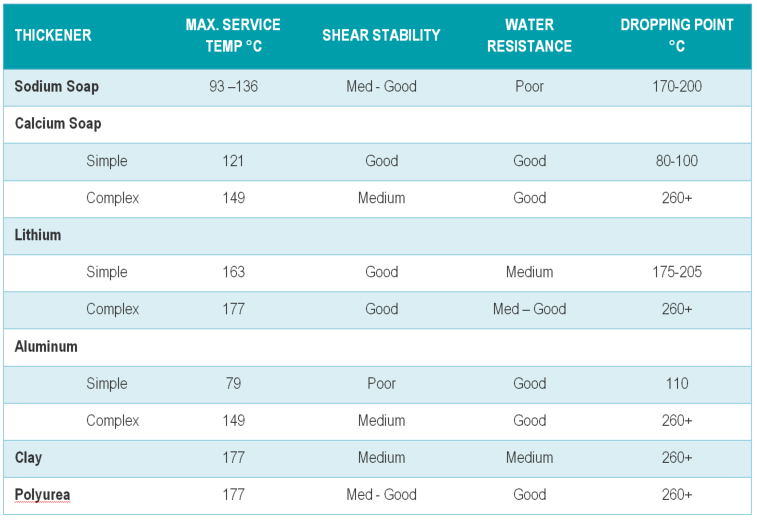
Thickener type will affect grease selection in terms of fundamental properties such as operating temperature wet performance pumbability and mechanical stability. Non-Soap Thickened Grease There are numerous types of these non-soap thickeners but primarily the most common is bentone with polyurea being a distant second runner-up. Addition of a non-compatable grease with the original during service.
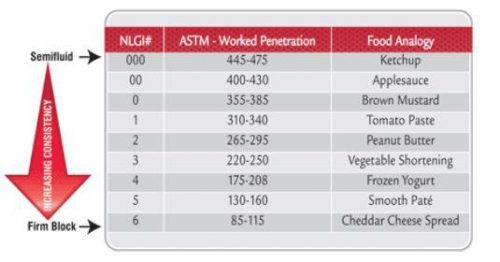
Classification of greases by consistency is in accordance with the National Lubricating Grease Institute NLGI ISO 2137. There are simple greases and complex greases depending on the types of fatty acids used. The focus in this article is on organic thickeners such as lithium stearate sodium dodecylsulfate and diurea.
More than one of the above. Lubricating grease is composed of liquid and solid phases and is basically comprised of three components namely i base oil ii thickener and iii additives and modifiers. Base oil thickener and additives.
There are simple greases and complex greases depending on the types of fatty acids used. A grease manufactured from a poor quality base oil thickener or faulty EP additive package. Thickeners are molecules polymers or particles that are partially soluble in lubricating fluid.
Simple lithium soaps accounted for 58 of the worldwide production in 2008 while lithium complex accounted for 15. Greases are primarily classified by their thickeners the most common being metallic soaps. Compatibility of grease mixtures categories Compatible.
Compatibility of these different grease types can be very important for users of grease-lubricated equipment. The liquid phase of grease is primarily formed by the base fluid and the solid phase is formed by a network structure of. The acid is a fatty along with in some cases a short-chain organic complexing acid.
Soap-based thickeners are produced from an acid base reaction. The wrong thickener type 3. Grease Compatibility Greases are available with many different thickener types base oil types and base oil viscosities.
Polyurea greases are the most popular non-soap grease today. Greases with a metallic soap thickener and a consistency grade of 1 2 or 3 soft to stiff. All these seven types of grease can be referred to as multipurpose MP greases extreme pressure EP greases marine greases heavy-duty greases specialty greases automotive greases industry greases and so on depending on the unique properties of base oils additives and thickeners used in.
Greases are used in the lubrication of bearings and other moving parts in virtually every segment of transportation and industry. However if he used a Calcium based grease then there wouldnt be an issue of water washout and the pins could have a longer life. Non-Soap Greases Urea Grease.
Mixing of different greases can result in changes in physical and performance. The base oil lubricates reducing friction between moving surfaces. Different types of greases are typically formulated with three grease components.
The ratios of the ingredients will determine the characteristics of the thickener. Playing such a critical role the thickener system should be chosen based on the lubrication requirements yet the proper combination. When stress or pressure is applied to the grease oil is released to provide lubrication.
Greases typically contain from 1 to 14 thickener by mass. The thickener defines the type of grease. The thickener defines the type of the grease.
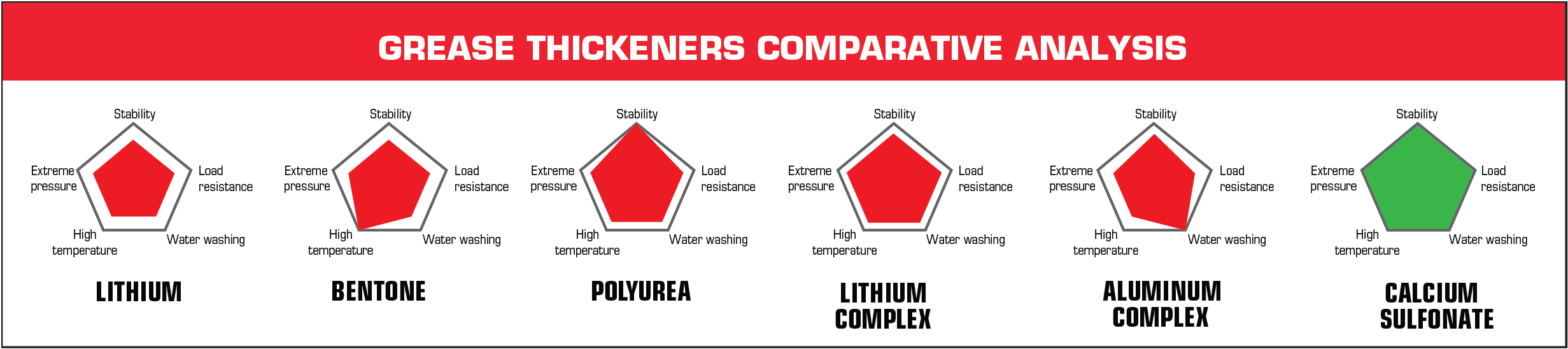
Complex lithium soaps are the fastest growing thickener type worldwide. Lithium complex grease has excellent heat and water resistance and rust preventing property as well as longer life at high temperature than lithium soap grease. There are three or four different types of materials that go into thickeners.
Consistency is a measure of the stiffness of the grease. The different types of soap thickeners include lithium 12-hydroxy stearate soaps lithium stearate soaps calcium soaps sodium soaps and aluminium soaps. Simple lithium soaps are more widely used because of their lower costs but lithium complex greases because of their inherently better properties are faster growing.
Lithium complex grease is the most widespread choice in the marketplace. While the thickening agents dont perform any lubrication they have a very important role in acting like a sponge. There is a wide variety of soap greases to choose from and they all have different physical properties where the application requirements dictate which soap is best.
This type of grease has a high dropping point approximately 470F has an ashless structure excellent water resistance pumpability and provides superb high temperature bearing life. They arrange themselves in such a way that they impart a semi-solid consistency to the grease. Lithium complex grease works well with most other greases except bentonite clay barium complex and conventional polyurea.
Since there are no metallic elements in polyurea grease the grease is ashless and subsequently more oxidatively stable. There are three or four different types of materials that go into thicken-ers. Soap and non-soap thickeners.
Know your applications and. Types of thickeners. Many different types of.
They are formed by. TYPES OF THICKENERS The thickener defines the type of grease. This is exactly the same role that the base oil plays in a lubricant oil.
Often used in electric motors alternators and in food. NLGI 2 is the most common grease thickness and has a consistency similar to peanut butter after being worked. A grease of fairly recent development that does not use a conventional soap thickener.
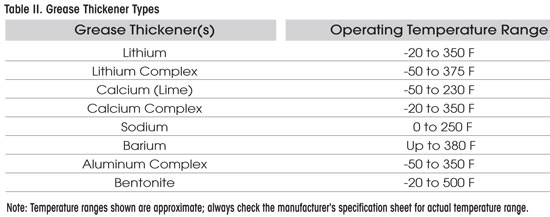
Above is a table indicating the various uses of greases based on the thickener types. Inorganc Thickened Grease Organ Clay Bentone Commercial bentone powder used as a thickener is basically an organophillic montmorillonite type of clay. Lithium Soaps Lithium 12-hydroxy stearate greases are currently the most common and widely used soap greases.
Most finished lubricants are mixtures of oils and additives but greases are one of the few types of lubricants that involve an actual chemical reaction during their manufacture. Others include bentonite clay silica gel polyurea and inorganic thickeners. The thickener in a lubricating grease is the component that sets grease apart from fluid lubricants.
The focus in this article is on or-ganic thickeners such as lithium stea-rate sodium dodecylsulfate and diurea.
Grease Compatibility Lrt Lubricants
What S In A Lubricant Characteristics Of Grease Efficient Plant

Demystifying Grease Part Ii Thickener Types And Compatibilities Application Expertise Lube Talk Mobil Connect

Grease Basics
Bicycle Bearing Greases Explained Bikegremlin
Lubricant Basics What Is Grease Fluid Life
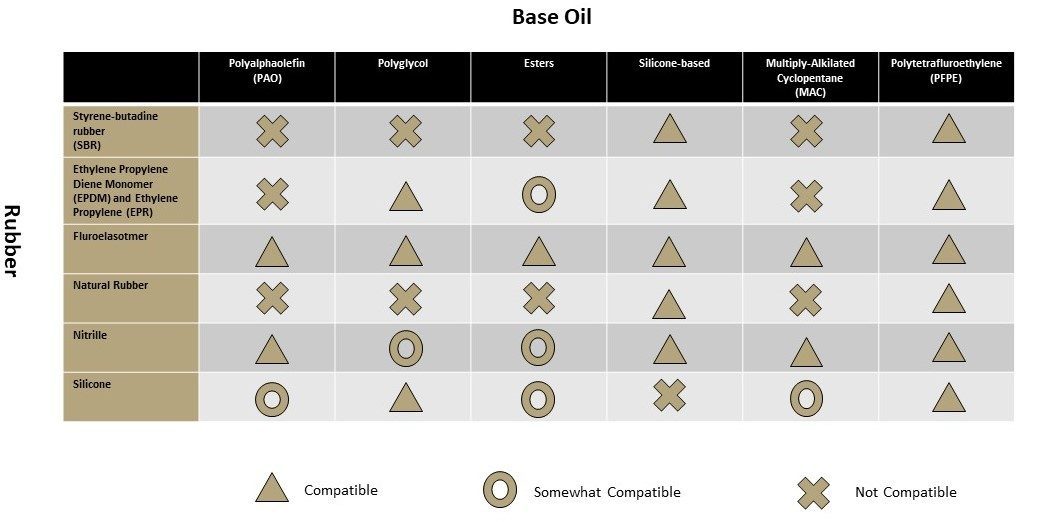
Rubber Seal Compatibility Chart

Choosing The Right Grease Thickening System


